• Home
  • Suggest A DIY
  • DIY Newsletter

Jewelry Making

DIY Jewelry, Beads And Patterns

  • About CraftGossip
  • Our Network
    • Bath & Body Crafts
    • Candle Making Ideas
    • Crochet Ideas
    • Cross Stitch
    • Edible Crafts
    • Felting Patterns
    • Glass Art
    • Home & Garden Ideas
    • Indie Crafts
    • Jewelry Making
    • Kids Crafts
    • Knitting Patterns
    • Lesson Plans
    • Needlework
    • Party Ideas
    • Polymer Clay
    • Quilting Ideas
    • Recycled Crafts
    • Scrapbooking
    • Sewing Patterns
    • Card Making
    • DIY Weddings
    • Not Craft Ideas
  • Giveaways
  • Roundups
  • Store
  • Search

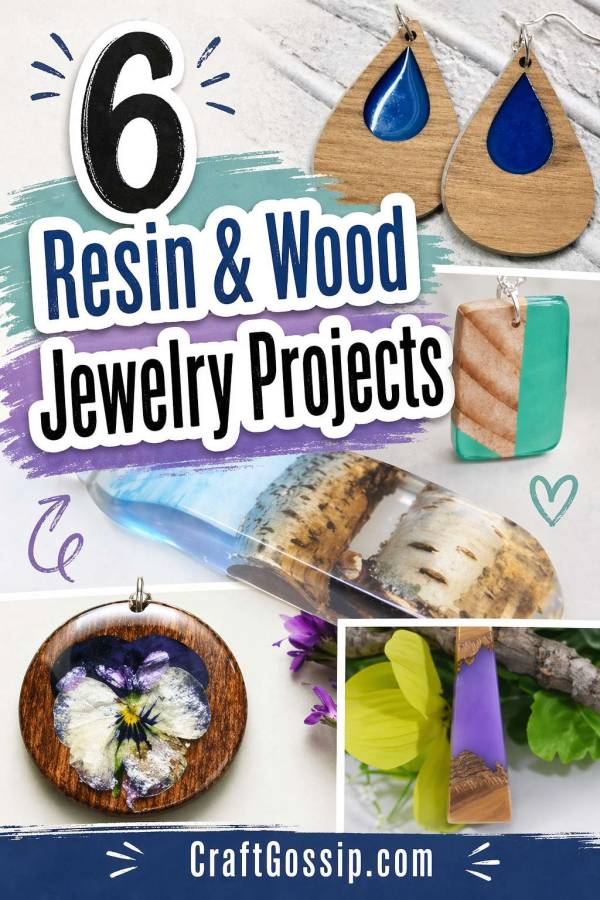
6 Wood And Resin Jewelry Tutorials

July 23, 2020 by Shellie Wilson

If you haven’t played with resin casting yet, then you have to give it a go. It isn’t as hard as it looks and it is so pretty when finished.

Polyester Resin: is a liquid plastic that hardens when a few drops of the catalyst are added to create a chemical reaction. Polyester Resin is durable and is the resin of choice for industrial applications and serious crafters who are experienced in resin casting. This resin is highly toxic and should be used in a well-ventilated area using protective masks to avoid inhalation. One main advantage of Polyester Resin is the depth in which it can be poured for larger embed projects. Polyester Resin is cheaper to buy than Epoxy resin as it is generally purchased in larger quantities such as 1lt + tins.

Epoxy Resin: These resins are more frequently used in the crafting and hobby world, they are easy to use with a low toxicity, making them suitable for ventilated craft rooms and work areas. Epoxy resin is perfect for jewelry casting as it has a shallow setting depth, so it will cure quickly when used correctly.

Basic Resin Casting to get started.

Resin Pendants How to cast shape and finish your own rustic jewelry

Tutorial: Wood and Resin Earrings

Resin and Wood Tutorial

How to make Wood and Resin Necklaces

HOW TO MAKE A SECRET WOOD PENDANT NECKLACE

Tutorial : Real Flower and Resin Jewelry using Wood Frames and Shapes

For complete instructions on casting with resin read these Basic resin-casting techniques

Here are our favorite supplies for using resin when casting

Casting Resin
Measuring Tools
Disposable Mixing bowl or cup
Disposable tools
Suitable resin molds
Spray oil Cooking Spray
Straw
Items for Embedding
Next Idea:

  • How To Start Jewelry Making: Beginner Tools,…
«
»

Have you read?

Book Review Wednesday: The Complete Guide to Trinket Dishes for Beginners

I’ll admit, this one has me slightly torn over where it belongs on CraftGossip — because trinket dishes made from polymer clay sit very neatly in that lovely little overlap between our Polymer Clay blog and our Jewelry Making blog.

Technically, yes, this is a polymer clay project book. But let’s be honest, what do most of us use trinket dishes for? Rings, earrings, necklaces, brooches, little charms, and all those “I’ll put this somewhere safe” pieces that immediately vanish into the craft-room Bermuda Triangle.

So for this week’s Book Review Wednesday, I’m leaning into the jewelry side of things withThe Complete Guide to Trinket Dishes for Beginners, because handmade trinket dishes are such a lovely companion project for jewelry makers. They are practical, pretty, giftable, and a nice way to use polymer clay without needing to jump straight into detailed beads or fiddly earring components.

And really, a handmade trinket dish is one of those beginner-friendly polymer clay projects that feels useful right away. You can make one for your bedside table, one for the bathroom, one near the kitchen sink for rings, one for your sewing room buttons, one for paper clips, one for “miscellaneous tiny things I refuse to throw away” — and suddenly you have made six. That’s crafting, isn’t it?

What I like about the idea of this book is that trinket dishes are a genuinely approachable starting point for beginners. Polymer clay can be a little intimidating when you see all those perfect canes, florals, marble effects, metallic finishes, and tiny sculpted details online. But a small dish? That feels doable. You can roll, shape, texture, bake, sand, paint, glaze, and still end up with something charming even if it is not completely perfect.

In fact, slightly imperfect is often where handmade trinket dishes look their best. A softly uneven edge, a little thumbprint curve, a marbled pattern that wandered off in its own direction — those are the details that make them feel handmade rather than mass-produced.

For jewelry makers, this book also opens up a nice little gift-making path. A handmade pair of earrings tucked into a matching polymer clay trinket dish would make a beautiful birthday gift, Mother’s Day present, craft stall set, or Christmas stocking idea. If you already make earrings or small accessories, a coordinating trinket dish adds that extra “oh, you made the whole thing?” moment, which we do love.

This is also why I think it works so well for the jewelry audience. It is not jewelry in the strictest sense, but it is jewelry-adjacent in the most useful way. It gives makers a way to display, store, gift, and package handmade pieces beautifully. If you enjoy our other jewelry making projects or you have been dabbling in polymer clay earrings, trinket dishes are a natural next step.

I would also cross-link this one from the polymer clay side because readers there will absolutely be interested too. Our polymer clay tutorials audience would appreciate the clay techniques, while the jewelry makers will appreciate the finished use. Honestly, this is one of those books that probably deserves to sit with one foot in each craft room.

The thing I always look for in beginner polymer clay books is whether they help you understand the basics without making the project feel fussy. For trinket dishes, beginners will want clear help with conditioning clay, rolling an even slab, creating clean shapes, adding texture, shaping the dish without cracking it, baking it properly, and finishing the surface so it feels smooth and gift-worthy.

Because nobody wants a ring dish that looks cute in theory but scratches the bedside table or feels like it might snap if you look at it too firmly.

This type of book would suit anyone who wants to make beginner polymer clay gifts, handmade jewelry dishes, ring bowls, small catch-all trays, or craft fair items. It also feels like a nice low-pressure project for a weekend afternoon. No complicated closures, no matching pairs, no tiny jump rings pinging across the room — just clay, shape, texture, and a finished piece that actually has a job to do.

And if you are the sort of maker who saves every leftover scrap of clay, this could be dangerous in the best possible way. Marbled trinket dishes are a perfect way to use up odd colours and little leftover bits from other projects. Much like fabric scraps, clay scraps seem harmless until they form their own ecosystem.

My Shellie-style verdict? The Complete Guide to Trinket Dishes for Beginners feels like a sweet, practical pick for makers who want to try polymer clay in a way that is useful, giftable, and not too intimidating. I would feature it on Jewelry Making because trinket dishes are so closely tied to storing and gifting handmade jewelry, but I would absolutely give it a little nod over on Polymer Clay too.

It is one of those crossover books that reminds us crafts do not always stay politely in their own category. Sometimes a polymer clay book belongs in jewelry making because that is where the finished piece will actually live — holding rings, earrings, charms, and all those tiny treasures we swear we are going to organise one day.

You can find the book here: The Complete Guide to Trinket Dishes for Beginners.

Tags

Bangles/Bracelets Beading Beginner Jewelry Making Book Reviews Craft Inspirations Crystal Jewelry Making DIY Necklace DIY Tutorials and Patterns earrings tutorials Felt/Fiber Halloween Jewelry For Men Jewelry Making - General Jewelry making - Supplies Jewelry Making Giveaways Jewelry Making Techniques Jewelry Making Tutorials and Ideas Mixed Media recycled/upcycled Wire Work

RSS More Articles

  • Cross Stitch Cards for All Occasions
  • Free Oven Mitt Sewing Pattern: A Fat Quarter Friendly Kitchen Gift You’ll Actually Use
  • What Does PSSO Mean In Knitting? How To Pass A Slipped Stitch Over
  • Sophie Hood Pattern Free: Knit And Crochet Hooded Scarf Patterns For The Viral Winter Look
  • Coca-Cola Foot Soak Recipe: The Viral Fizzy Foot Hack For Tired, Rough Feet
  • 3 FREE Dark Romantasy Coloring Pages
  • Needle Felted Tropical Hibiscus Flower Tutorial
  • 12 Masculine Scrapbook Layouts for Men
  • Book Review: The No-Brainer Brain Explainer
  • Knit and Felt Some Tabi Style Slippers

Pick Your Blog

  • Sewing
  • Knitting
  • Quilting
  • Crochet
  • Home & Garden
  • Recycled Crafts
  • Scrapbooking
  • Card Making
  • Polymer Clay
  • Cross-Stitch
  • Edible Crafts
  • Felting
  • Glass Art
  • Indie Crafts
  • Kids Crafts
  • Jewelry Making
  • Lesson Plans
  • Needlework
  • Bath & Body
  • Party Ideas
  • Candle Making
  • DIY Weddings
  • Not Craft
  • Free Craft Projects

Copyright © 2026 · CraftGossip | Start Here | Contact Us | Link to Us | Your Editors | Privacy and affiliate policy