• Home
  • Suggest A DIY
  • DIY Newsletter

Jewelry Making

DIY Jewelry, Beads And Patterns

  • About CraftGossip
  • Our Network
    • Bath & Body Crafts
    • Candle Making Ideas
    • Crochet Ideas
    • Cross Stitch
    • Edible Crafts
    • Felting Patterns
    • Glass Art
    • Home & Garden Ideas
    • Indie Crafts
    • Jewelry Making
    • Kids Crafts
    • Knitting Patterns
    • Lesson Plans
    • Needlework
    • Party Ideas
    • Polymer Clay
    • Quilting Ideas
    • Recycled Crafts
    • Scrapbooking
    • Sewing Patterns
    • Card Making
    • DIY Weddings
    • Not Craft Ideas
  • Giveaways
  • Roundups
  • Store
  • Search

Book Review – Mixed Metals: Creating Contemporary Jewelry with Silver, Gold, Copper, Brass & More

May 6, 2009 by Barbe Saint John


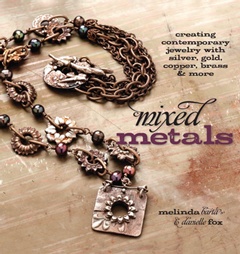
97815966809201 Mixed Metals: creating contemporary jewelry with silver, gold, copper, brass & more. Melinda Barta & Danielle Fox

  •  Paperback: 112 pages
  • Publisher: Interweave Press (May 1, 2009)
  • Language: English
  • ISBN-10: 159668092X
  • ISBN-13: 978-1596680920

The authors Danielle Fox & Melinda Barta seem to out do themselves with each book they put out. Whenever I get their lastest, I am blown away with how great it is. I think there is NO way they can top themselves with the next one, only to be happily proven wrong.  Mixed Metals had me when I saw the cover-SWOON!!!!

The focus of Mixed Metals: Creating contemporary jewelry with silver, gold, copper, brass & more is about rethinking the way we use metal in our jewelry designs.  Utilizing premade metal beads, charms, clasp. chains and other components accessible at any bead store, this mixed metal jewelry book offers 21 boutique style projects that don’t require any metalworking skills.  Whether an experienced beader or beginner, these gorgeous projects will inspire you to “mix it up” and have fun with a variety of premade components.

The projects themselves are so lovely, you will be running to your local bead or craft store to find some of the unique items shown in this book. I have a HUGE shopping list already compiled.

Mixed Metals begins with projects based on each type of metal – Gold, Silver, Base Metals, Faux/other metals and Mixing Metals. Each chapter has background information on that type of metal, from  history, facts, common properties to  care, and cleaning.  Each project had step by step instructions and detailed photography.

There are also techniques for altering the metals by using liver of sulfur, other patinas, and hammering.   A glossary of terms, beading & wirework 101 techniques, resources and shopping guide are at the end of the book.

The diversity of the projects as well as the components makes this book really stand out.  I think this book will be liberating to alot of  jewelrymakers who feel a bit stuck with just using all one type of metal. You won’t be afraid to throw caution to the wind and mix some gold and silver chains with copper charms after reading this book.   I can’t pick ONE favorite out of this book because the are all so lush.  Its a gorgeous book not only for it’s projects, but also for it’s inspiration and shopping links.

.
Next Idea:

  • How To Start Jewelry Making: Beginner Tools,…
«
»

Have you read?

Book Review Wednesday: The Complete Guide to Trinket Dishes for Beginners

I’ll admit, this one has me slightly torn over where it belongs on CraftGossip — because trinket dishes made from polymer clay sit very neatly in that lovely little overlap between our Polymer Clay blog and our Jewelry Making blog.

Technically, yes, this is a polymer clay project book. But let’s be honest, what do most of us use trinket dishes for? Rings, earrings, necklaces, brooches, little charms, and all those “I’ll put this somewhere safe” pieces that immediately vanish into the craft-room Bermuda Triangle.

So for this week’s Book Review Wednesday, I’m leaning into the jewelry side of things withThe Complete Guide to Trinket Dishes for Beginners, because handmade trinket dishes are such a lovely companion project for jewelry makers. They are practical, pretty, giftable, and a nice way to use polymer clay without needing to jump straight into detailed beads or fiddly earring components.

And really, a handmade trinket dish is one of those beginner-friendly polymer clay projects that feels useful right away. You can make one for your bedside table, one for the bathroom, one near the kitchen sink for rings, one for your sewing room buttons, one for paper clips, one for “miscellaneous tiny things I refuse to throw away” — and suddenly you have made six. That’s crafting, isn’t it?

What I like about the idea of this book is that trinket dishes are a genuinely approachable starting point for beginners. Polymer clay can be a little intimidating when you see all those perfect canes, florals, marble effects, metallic finishes, and tiny sculpted details online. But a small dish? That feels doable. You can roll, shape, texture, bake, sand, paint, glaze, and still end up with something charming even if it is not completely perfect.

In fact, slightly imperfect is often where handmade trinket dishes look their best. A softly uneven edge, a little thumbprint curve, a marbled pattern that wandered off in its own direction — those are the details that make them feel handmade rather than mass-produced.

For jewelry makers, this book also opens up a nice little gift-making path. A handmade pair of earrings tucked into a matching polymer clay trinket dish would make a beautiful birthday gift, Mother’s Day present, craft stall set, or Christmas stocking idea. If you already make earrings or small accessories, a coordinating trinket dish adds that extra “oh, you made the whole thing?” moment, which we do love.

This is also why I think it works so well for the jewelry audience. It is not jewelry in the strictest sense, but it is jewelry-adjacent in the most useful way. It gives makers a way to display, store, gift, and package handmade pieces beautifully. If you enjoy our other jewelry making projects or you have been dabbling in polymer clay earrings, trinket dishes are a natural next step.

I would also cross-link this one from the polymer clay side because readers there will absolutely be interested too. Our polymer clay tutorials audience would appreciate the clay techniques, while the jewelry makers will appreciate the finished use. Honestly, this is one of those books that probably deserves to sit with one foot in each craft room.

The thing I always look for in beginner polymer clay books is whether they help you understand the basics without making the project feel fussy. For trinket dishes, beginners will want clear help with conditioning clay, rolling an even slab, creating clean shapes, adding texture, shaping the dish without cracking it, baking it properly, and finishing the surface so it feels smooth and gift-worthy.

Because nobody wants a ring dish that looks cute in theory but scratches the bedside table or feels like it might snap if you look at it too firmly.

This type of book would suit anyone who wants to make beginner polymer clay gifts, handmade jewelry dishes, ring bowls, small catch-all trays, or craft fair items. It also feels like a nice low-pressure project for a weekend afternoon. No complicated closures, no matching pairs, no tiny jump rings pinging across the room — just clay, shape, texture, and a finished piece that actually has a job to do.

And if you are the sort of maker who saves every leftover scrap of clay, this could be dangerous in the best possible way. Marbled trinket dishes are a perfect way to use up odd colours and little leftover bits from other projects. Much like fabric scraps, clay scraps seem harmless until they form their own ecosystem.

My Shellie-style verdict? The Complete Guide to Trinket Dishes for Beginners feels like a sweet, practical pick for makers who want to try polymer clay in a way that is useful, giftable, and not too intimidating. I would feature it on Jewelry Making because trinket dishes are so closely tied to storing and gifting handmade jewelry, but I would absolutely give it a little nod over on Polymer Clay too.

It is one of those crossover books that reminds us crafts do not always stay politely in their own category. Sometimes a polymer clay book belongs in jewelry making because that is where the finished piece will actually live — holding rings, earrings, charms, and all those tiny treasures we swear we are going to organise one day.

You can find the book here: The Complete Guide to Trinket Dishes for Beginners.

Tags

Bangles/Bracelets Beading Beginner Jewelry Making Book Reviews Craft Inspirations Crystal Jewelry Making DIY Necklace DIY Tutorials and Patterns earrings tutorials Felt/Fiber Halloween Jewelry For Men Jewelry Making - General Jewelry making - Supplies Jewelry Making Giveaways Jewelry Making Techniques Jewelry Making Tutorials and Ideas Mixed Media recycled/upcycled Wire Work

RSS More Articles

  • FIFA Soccer Crafts For Kids, Crochet Fans And Game-Day Makers
  • Cross Stitch Ice Cream and Frozen Treats
  • Sunflower Ribbon Embroidery Tutorials and Kits to Brighten Your Hoop
  • 15 Charity Sewing Projects That Let You Sew Something Useful For A Good Cause
  • Decorating Mistakes That Make Your Living Room Feel Cluttered
  • Remembering Jill Smokler, Founder Of Scary Mommy
  • In the Garden Layer Cake – A Bloom-Filled Fabric Collection for Spring Sewing
  • How To Do Kitchener Stitch: A Beginner-Friendly Guide To Grafting Knitting Seamlessly
  • Pattern Review: Georgie Granny Square Bucket Hat Crochet Pattern
  • Free Giant Squishy Octopus Crochet Pattern

Pick Your Blog

  • Sewing
  • Knitting
  • Quilting
  • Crochet
  • Home & Garden
  • Recycled Crafts
  • Scrapbooking
  • Card Making
  • Polymer Clay
  • Cross-Stitch
  • Edible Crafts
  • Felting
  • Glass Art
  • Indie Crafts
  • Kids Crafts
  • Jewelry Making
  • Lesson Plans
  • Needlework
  • Bath & Body
  • Party Ideas
  • Candle Making
  • DIY Weddings
  • Not Craft
  • Free Craft Projects

Copyright © 2026 · CraftGossip | Start Here | Contact Us | Link to Us | Your Editors | Privacy and affiliate policy