I have a bit of a soft spot for polymer clay jewelry books, mostly because polymer clay looks so simple when you first start, and then five minutes later you are wondering why there is lint in the white clay, why your edges look chewed, and why the pair of earrings you carefully made no longer look like sisters.
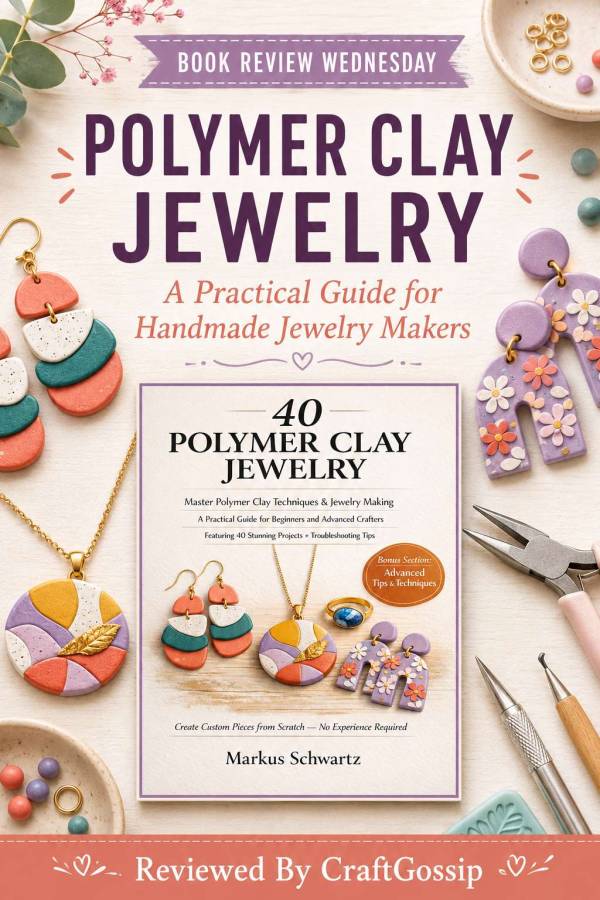
So this week’s Book Review Wednesday pick is Polymer Clay Jewelry, a book aimed at makers who want to get more confident with polymer clay jewelry making, especially when it comes to troubleshooting those little problems that can make a finished piece feel less polished than you hoped.
And honestly, I think that is where this type of jewelry making book is most useful. Pretty polymer clay earrings are everywhere now — from handmade markets to Etsy shops to those gorgeous little reels where everything looks perfectly smooth and colour-coordinated. But if you have ever sat at your own craft table with clay stuck under your fingernails and a baking tray full of slightly wonky shapes, you will know there is a lot more going on behind the scenes.
Polymer clay is a wonderfully forgiving material in some ways, but it is also a little fussy. It picks up dust. It shows fingerprints. It needs proper conditioning. It can crack, bubble, burn, bend, or bake unevenly if you are still learning. None of that means you are bad at it — it just means there are a few tricks worth knowing before you turn half your craft room into an earring factory.
That is why I like the idea of a book that focuses not just on making polymer clay jewelry, but on understanding what can go wrong and how to fix it. Those are the books that tend to stay on the shelf, because you pull them out when something has gone sideways and you need a sensible answer rather than another “perfect” inspiration photo.
This book would be a good fit for beginners who want to make polymer clay earrings, pendants, charms, or small handmade jewelry gifts, but it would also suit makers who have tried polymer clay before and felt a bit frustrated with the finish. Sometimes the difference between a homemade-looking pair of earrings and a handmade-looking pair of earrings is just learning how to smooth the edges properly, place the holes neatly, bake at the right temperature, and attach the findings so they sit nicely.
If you already enjoy browsing our jewelry making tutorials on CraftGossip, this book fits right into that same creative space — practical, pretty, and very easy to fall down a rabbit hole with. Polymer clay is especially lovely if you enjoy colour, pattern, and small projects that do not require dragging out the entire sewing room. Although, let’s be honest, the clay stash can multiply just as quickly as fabric scraps.
I also think polymer clay jewelry is a great craft for handmade gifts. A pair of earrings, a simple pendant, or a little charm can feel personal without taking weeks to finish. It is the kind of project you can make in an afternoon, which is always appealing when you need a quick birthday gift, market stall idea, or “I just need to make something pretty today” project. You can also pair it with other ideas from our CraftBits jewelry making projects if you like mixing techniques and trying different materials.
The part I would be looking for most in a book like this is the troubleshooting. I want to know how to avoid fingerprints, how to stop colours from smearing, how to get clean cutter edges, and how to bake polymer clay jewelry so the finished pieces feel strong but still lightweight. These are the details that matter when you actually sit down to make something.
Because yes, inspiration is lovely — but a proper explanation of why your earring post fell off is even better.
If you are completely new to polymer clay jewelry making, I would suggest starting with a few simple tools rather than buying everything at once. A roller, tissue blade, a couple of cutters, sanding pads, jewelry pliers, jump rings, and good earring findings will get you quite a long way. You can always add texture sheets, silkscreens, specialty cutters, and fancy finishes later once you know what you enjoy making most. Craft supplies have a way of inviting themselves into the house, so there is no need to rush them.
My feeling is that Polymer Clay Jewelry would be a useful pick for makers who want to move beyond the first experimental stage and start making pieces that feel more polished and wearable. It looks like the kind of guide that would help you understand the small technical details that make a big difference — especially if you are making earrings, charms, pendants, or handmade gifts.
And if you have already had a few “why did that happen?” moments with polymer clay, this may be exactly the sort of book you want beside you at the craft table.
You can find the book here: Polymer Clay Jewelry on Amazon.